

What is the past? And why does it keep resurfacing in the present with, sometimes, the most unexpected forms? These questions apply to both our lives as individuals, communities, nations, and even the global population. To answer them, I go beyond the necessary scientific publications, seeking collaborations with creative professionals, human activists, artists, poets, museum curators.
From this urge to reach a wider public via different means, springs my collaboration with the extraordinary institution of the Museum of Broken Relationships, located in Zagreb, Croatia. As part of my Marie Curie Fellowship, the four years long collaboration with the museum has produced the curatorship of the following two exhibitions.
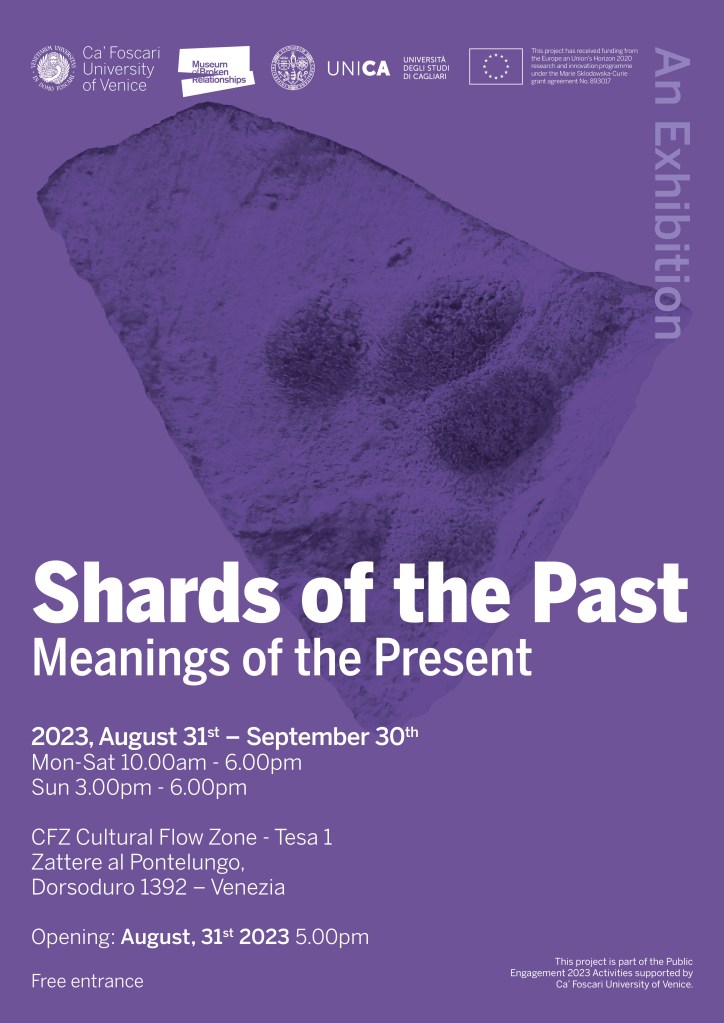
“Shards of the Past, Meanings of the Present”
Venice, August – October 2023
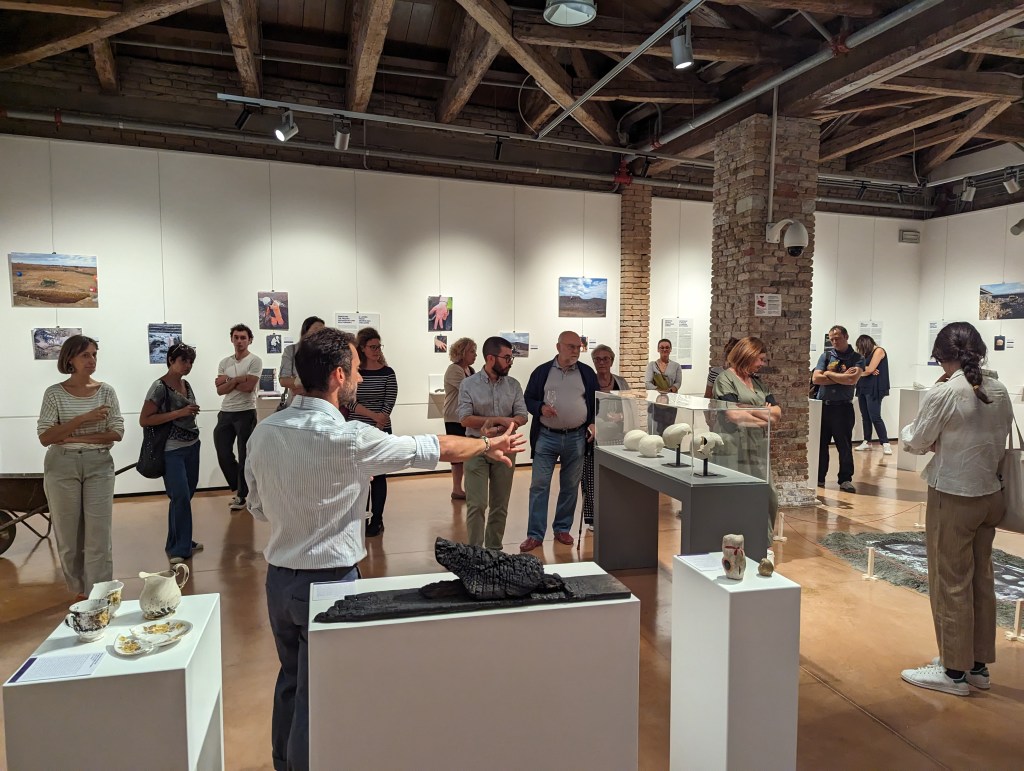
This exhibition brings together ancient archaeological exhibits from Roman-period Sardinia and contemporary exhibits from the Museum of Broken Relationships in Zagreb, as well as artifacts from the profession of archaeologists.
Through this juxtaposition of objects from different times and contexts, we aim to: giving relevance to everyday objects usually overlooked in traditional historical narratives; reconstruct the micro-histories of lesser-known women and men who have been overshadowed by the dominant narratives that too frequently focus on masculine elites. Our focus lies on the subalterns and their social relationships, as well as their physical bodies, as sites of power, creative action, memory, and resistance. Join us in this journey through time to witness more collective, diverse, inclusive histories.
On display are photographs, drawings, and 3D reproductions of artifacts from Roman period Sardinia, where my project IDENTIS focuses, including objects that reflect the daily lives of likely enslaved individuals and other subaltern groups such as peasants and shepherds, for instance the reconstruction of the grave 43 B from Maullas, west central Sardinia.
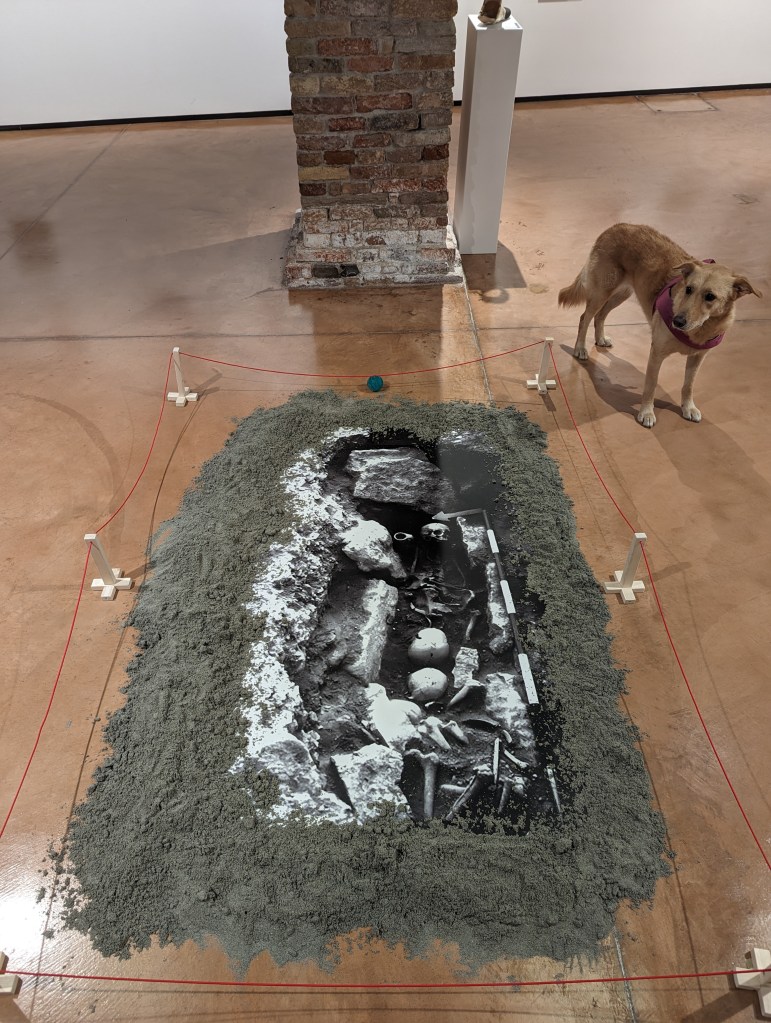
4th century AD.
Masullas, Roman Province of Sardinia.
Excavated in the autumn of 1997 by the Soprintenden-
za Archeologica di Cagliari, this grave hosted one
person buried in the 4th century CE with 3 crania laid
on its body and long bones at its feet. This ritual stands
off from the rest of individual graves in the necropolis
of Sa Mitza Salida.
Alongside ancient finds are objects from the Museum of Broken Relationships that represent the impact of societal norms and power dynamics on intimate relationships, such as the this coin from Alta, Norway, and this fragment of pavement with inscribed initials from Pittsburgh, United States.
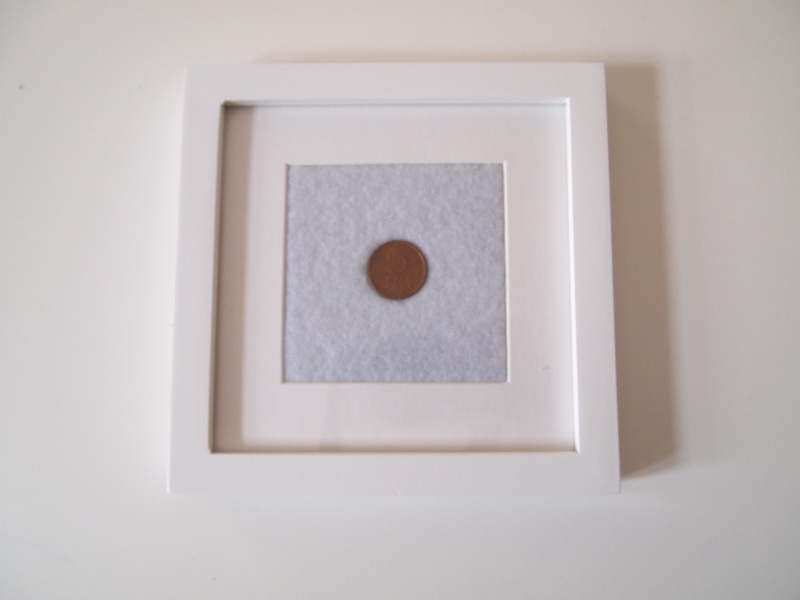
April 28th 1976 – September 9th 1999.
Alta, Norway.
Grandfather. An austere man, but also so generous. I
wish I had let him teach me even more while he was
alive, he had so much to give. The coin is from my
childhood, and is a symbol of how my Grandfather
saved what he could, to help us, who came after, have
a more secure life. I miss my Grandfather, I wish I could
have been there more for him.
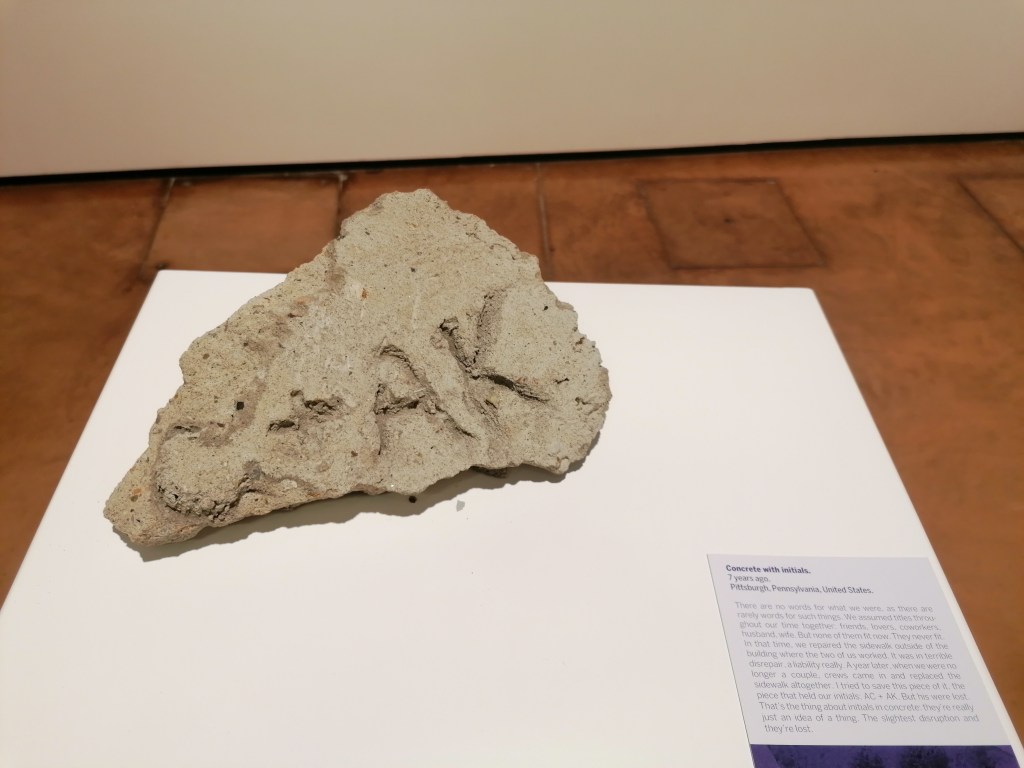
7 years ago.
Pittsburgh, Pennsylvania, United States.
There are no words for what we were, as there are
rarely words for such things. We assumed titles throu-
ghout our time together: friends, lovers, coworkers,
husband, wife. But none of them fit now. They never fit.
In that time, we repaired the sidewalk outside of the
building where the two of us worked. It was in terrible
disrepair, a liability really. A year later, when we were no
longer a couple, crews came in and replaced the
sidewalk altogether. I tried to save this piece of it, the
piece that held our initials: AC + AK. But his were lost.
That’s the thing about initials in concrete: they’re really
just an idea of a thing. The slightest disruption and
they’re lost.
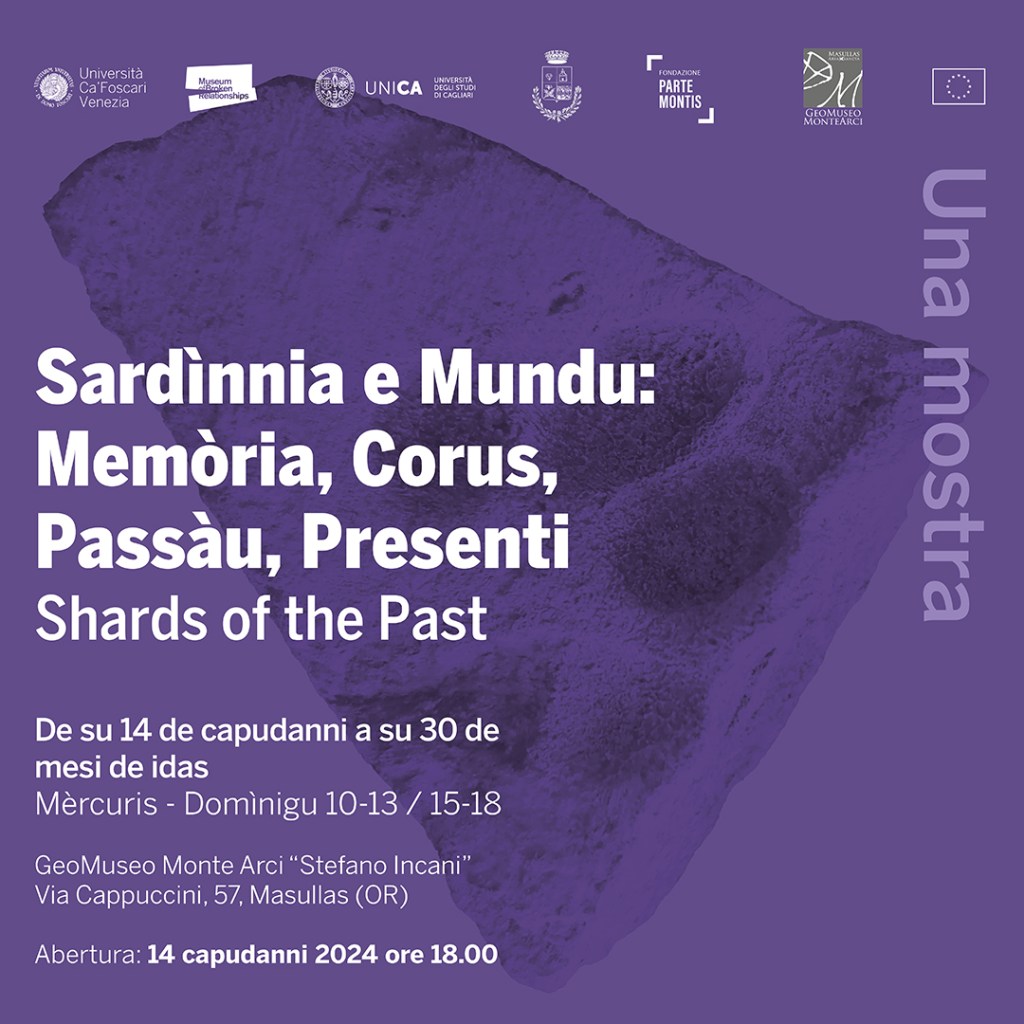
“Sardinnia e Mundu: Memòria, Corus, Passàu, Presenti”
Masullas (Sardinia) September 2024 – March 2025
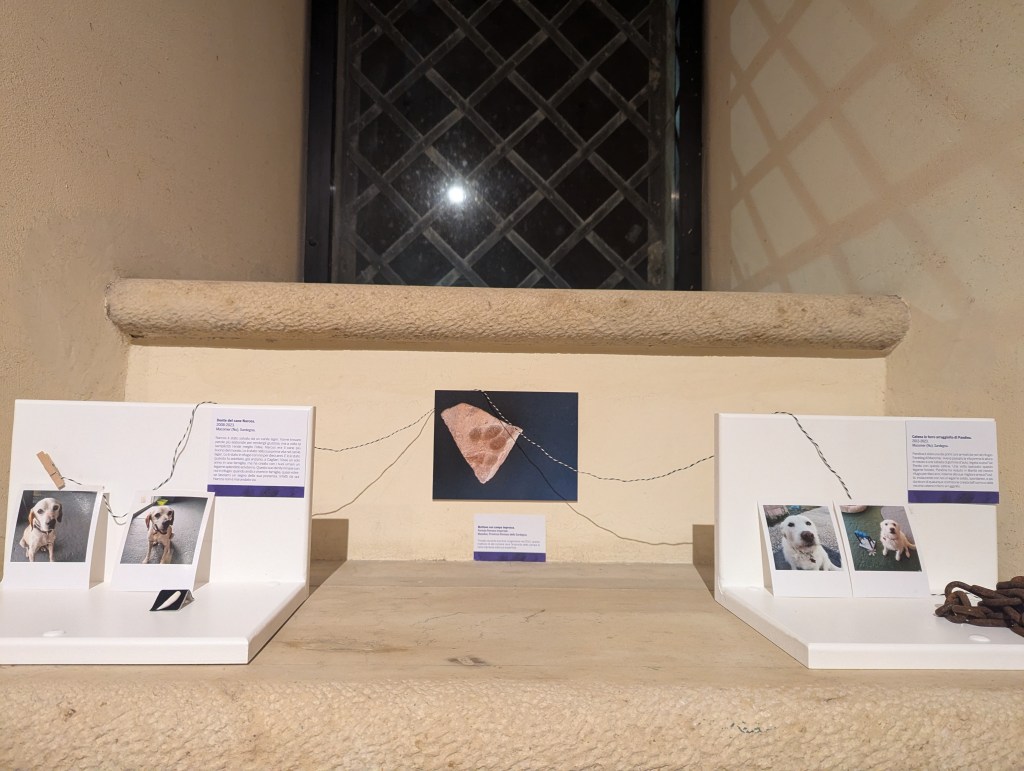
Born as a continuation of Shards of the Past, Sardinnia e Mundu aims to engage primarily with the rural communities of central Sardinia. Through the exhibition, I brought back to the island archaeological artefacts and stories originally from there, placing them in dialogue with contemporary objects and narratives from Sardinia and beyond.
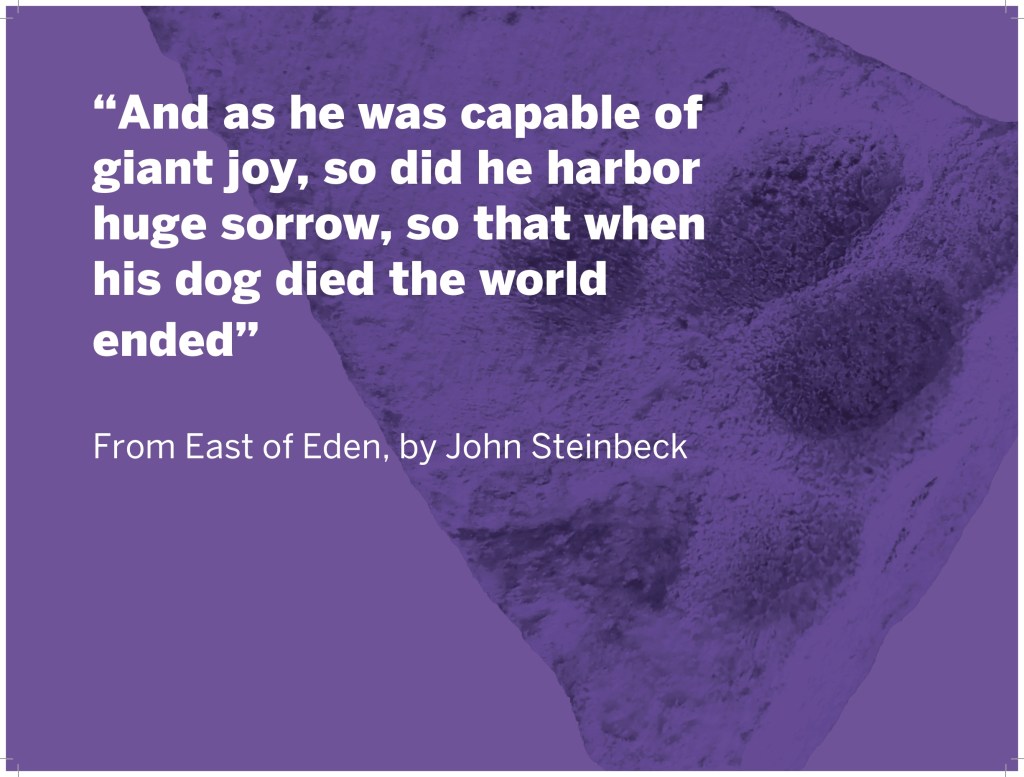
One example of this curatorship idea is the the interaction of human-animal stories across different eras: The image below features a Roman period brick imprinted with a distinctive paw print, discovered during my survey in Masullas in 2021. This ancient traces intertwines with the stories of Pandina and Argo—two dogs whose lives are represented through the materiality of their chain and tooth, generously donated to us by the wonderful Macomer-based shelter, Facedog.
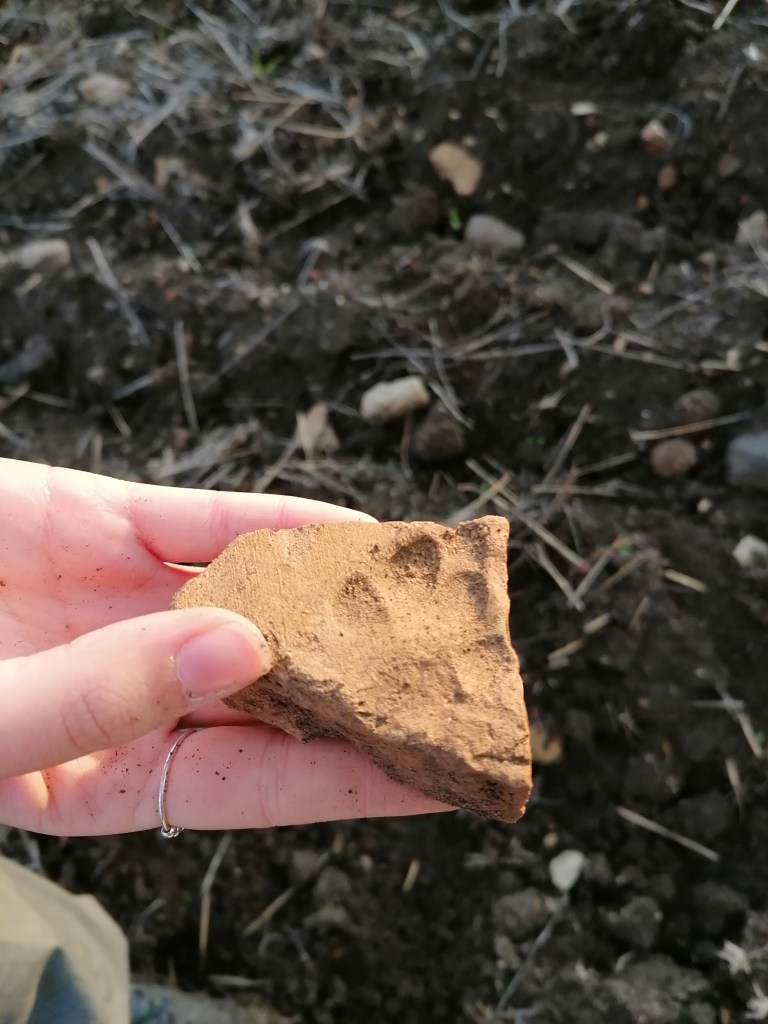
Imperial Roman period.
Masullas, Roman Province of Sardinia.
This fragment of Roman period brick, found during the
first of three archaeological survey seasons held in
November 2021, has a dog’s paw print impressed on
its surface.
 Mauro Puddu